


永和古茶园
The Eternal Peace Ancient Tea Garden
E: 24°30’25.63”, N: 100°00’12.84”
FENGQING, YUNNAN, CHINA
bodhi tea co. is based at The Eternal Peace Ancient Tea Garden in Fengqing County, Yunnan China.
As stewards of a tradition spanning multiple centuries, our aspiration is to honor the land, culture and community of which we are a part of.
It is with deep honor that we welcome you into our story.
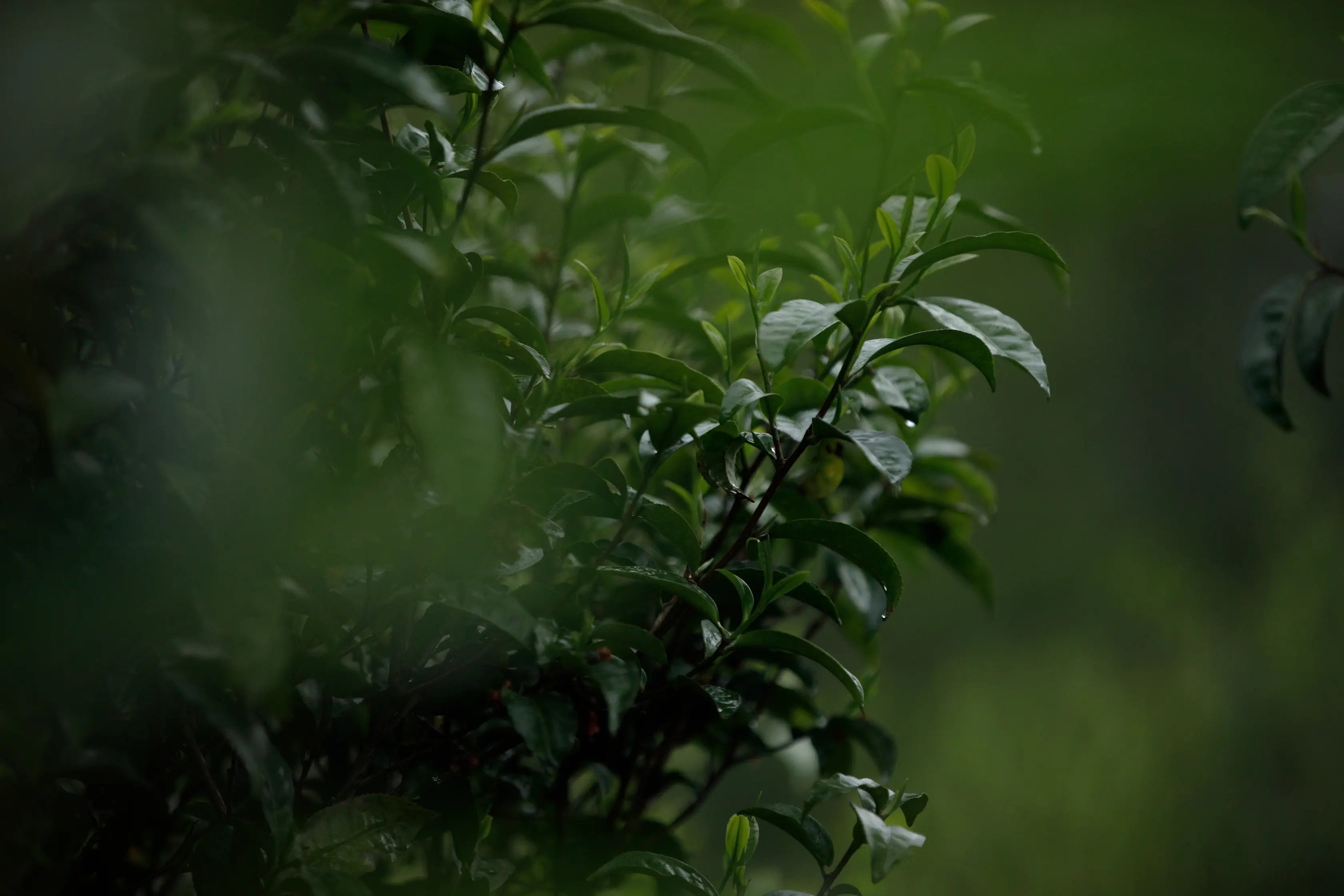
Nestled, in the Hengduan Mountain Range at an altitude of over 2200 meters above sea level, our organic ancient trees thrive in a regenerative environment, irrigated by pure mountain snowmelt.

The earliest historical records from 200 A.D. recognize ethnic Dai people to be among the first recorded humans to have settled in Fengqing. These indigenous peoples, ancestors of our founders, foraged the wild tea trees and used the leaves for medicinal purposes.

The Tea Horse Road
茶馬古道
茶馬古道
Fengqing would become an important stop on the Tea Horse Road, as there was “no village ahead and no inn behind,” in the isolated area. Due to the constant traffic of porters, merchants and monks, Fengqing became home to more than just its native Fengqing Large Leaf (Fengqing Daye) Cultivar, but to other tea subvarietals such as the prized Cat Ear (Mao Er Duo), Willow Leaf (Liu Ye), and Purple Bud (Zi Ya).
In the Tang Dynasty, the Tea Horse Road served as an artery between Yunnan, Sichuan, Myanmar and Tibet, with Fengqing being a crucial stop before the road split to a Western Route (Myanmar) a Northern Route (Dali, Lijiang, Tibet), and a Southern Route (Pu’er, Xishuanbanna).
The namesake of the road was given due to the practice of trading Tibetan Ponies, which were useful for transportation, for Yunnan Tea, which the Tibetans used as a nutritional supplement and digestive in their rugged environment. In the Song Dynasty the trade for horses became an important aspect of the court’s military strategy.


(Above) Men Laden With Tea. Sichuan, China. Ernest H. Wilson (1908)
(Left) A Farmer Carries His Tea Home. Lao Ou for Bodhi Tea Collection (2025)


The Lingying Mountain Temple
灵应山寺
灵应山寺
(Above) A stone inscribed with the history of the Eternal Peace Ancient Tea Garden Center, which records the establishment of the Tea Center by Buddhist Monks of the Lingying Mountain Temple in the Qing Dynasty during the rule of Emperor Yongzheng (1722-1735 AD). Bodhi Tea Collection continues to craft tea at this courtyard to this day, which also serves as an experience center to guests.
(Left) The Lingying Mountain Temple, a Daoist Temple, now located a little further up the mountain. A Buddhist Temple no longer exists in this area, and it is possible that it later converted to the related Daoist practice. In China, Daoist monks were among the first to practice Buddhist meditation, as they were exposed to the knowledge from India via The Tea Horse Road. The syncretization of these traditions gave rise to Chan (Zen) Buddhism.
In 2000, the Zhu family, a dai family from Pu’er, take stewardship of the The Eternal Peace Ancient Tea Gardens, ensuring preservation of traditional organic and regenerative farming methods, as well as innovation to traditional tea processing.
(Right) Tea Master and Founder, Zhu Xian Dong, observes the progress of shaded Gushu (Ancient Trees) during the 2025 Spring Harvest.

Nestled, in the Hengduan Mountain Range at an altitude of over 2200 meters above sea level, our organic ancient trees thrive in a regenerative environment, irrigated by pure mountain snowmelt.
The earliest historical records from 200 A.D. recognize ethnic Dai people to be among the first recorded humans to have settled in Fengqing. These indigenous peoples, ancestors of our founders, foraged the wild tea trees and used the leaves for medicinal purposes.
The Tea Horse Road
茶馬古道
茶馬古道
Fengqing would become an important stop on the Tea Horse Road, as there was “no village ahead and no inn behind,” in the isolated area. Due to the constant traffic of porters, merchants and monks, Fengqing became home to more than just its native Fengqing Large Leaf (Fengqing Daye) Cultivar, but to other tea subvarietals such as the prized Cat Ear (Mao Er Duo), Willow Leaf (Liu Ye), and Purple Bud (Zi Ya).
Men Laden With Tea. Sichuan, China. Ernest H. Wilson (1908)
In the Tang Dynasty, the Tea Horse Road served as an artery between Yunnan, Sichuan, Myanmar and Tibet, with Fengqing being a crucial stop before the road split to a Western Route (Myanmar) a Northern Route (Dali, Lijiang, Tibet), and a Southern Route (Pu’er, Xishuanbanna).
A Farmer Carries His Tea Home. Lao Ou for Bodhi Tea Collection (2025)
The namesake of the road was given due to the practice of trading Tibetan Ponies, which were useful for transportation, for Yunnan Tea, which the Tibetans used as a nutritional supplement and digestive in their rugged environment. In the Song Dynasty the trade for horses became an important aspect of the court’s military strategy.
The Linying Mountain Temple
灵应山寺
灵应山寺
A stone inscribed with the history of the Eternal Peace Ancient Tea Garden Center, which records the establishment of the Tea Center by Buddhist Monks of the Lingying Mountain Temple in the Qing Dynasty during the rule of Emperor Yongzheng (1732-1735 AD). Bodhi Tea Collection continues to craft tea at this courtyard to this day, which also serves as an experience center to guests.
The Linying Mountain Temple, a Daoist Temple, now located a little further up the mountain. A Buddhist Temple no longer exists in this area, and it is possible that it later converted to the related Daoist practice. In China, Daoist monks were among the first to practice Buddhist meditation, as they were exposed to the knowledge from India via The Tea Horse Road. The syncretization of these traditions gave rise to Chan (Zen) Buddhism.
Tea Master and Founder, Zhu Xian Dong, observes the progress of shaded Gushu (Ancient Trees) during the 2025 Spring Harvest.
In 2000, the Zhu family, a dai family from Pu’er, take stewardship of the The Eternal Peace Ancient Tea Gardens, ensuring preservation of traditional organic and regenerative farming methods, as well as innovation to traditional tea processing.

